

Issue Collection Groups
Issue collection groups let you organize issue collections — the projects, boards, or spaces from your issue trackers — into named sets, so that reports can be aggregated by group rather than by individual collection. They also act as an access boundary: a user's Issue Collection Groups access setting controls which collections' data they can see.
Groups list
- Name — The group's display name, as it appears in report filters.
- Reference — The group's unique slug identifier.
- Collections — The issue collections included in the group. The first few are listed; hover and N more to see the rest.
- Actions — Per-row menu with Edit and Delete.
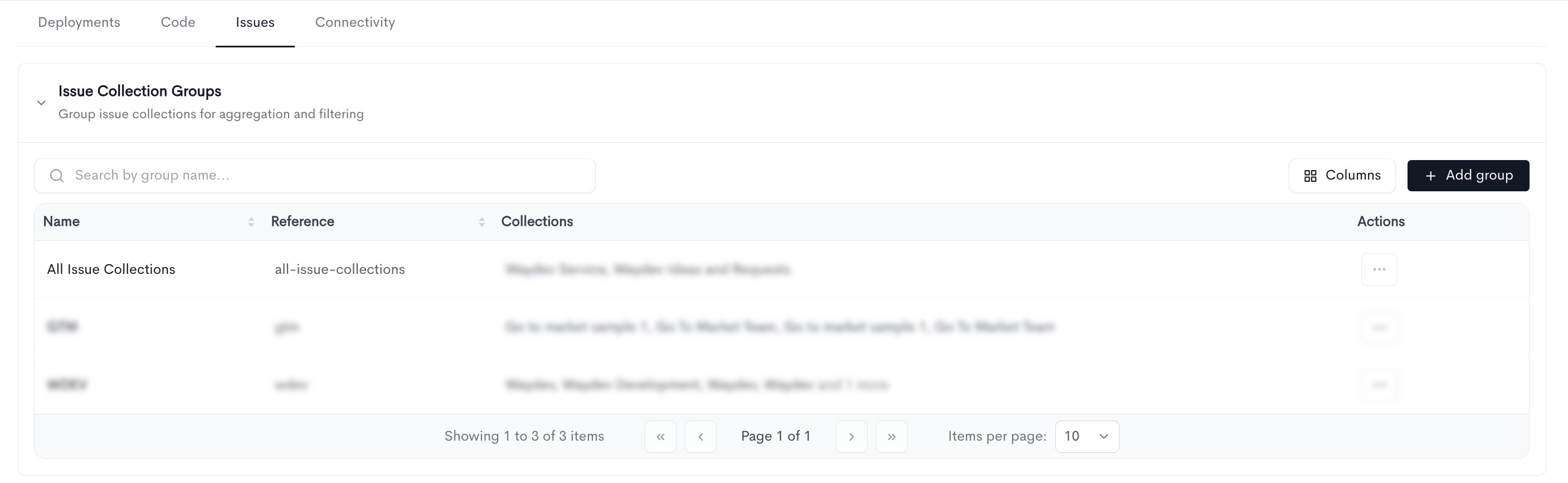
Default group
Every workspace has a built-in all issue collections group that includes everything. It can't be edited or deleted — its action menu is disabled — because it's what reports and access checks fall back to when no narrower group applies.
Adding or editing a group
Click Add group, or Edit on an existing row. All three fields are required:
- Name — A display name for the group, e.g. Core Projects.
- Reference — A unique slug identifier used to reference the group programmatically. Lowercase letters, numbers, and dashes only, e.g. core-projects.
- Issue collections — The collections to include. The selector supports searching, loading more results as you scroll, and a select-all option; a running count of your selection is shown beneath it.
Filtering by issue collection group
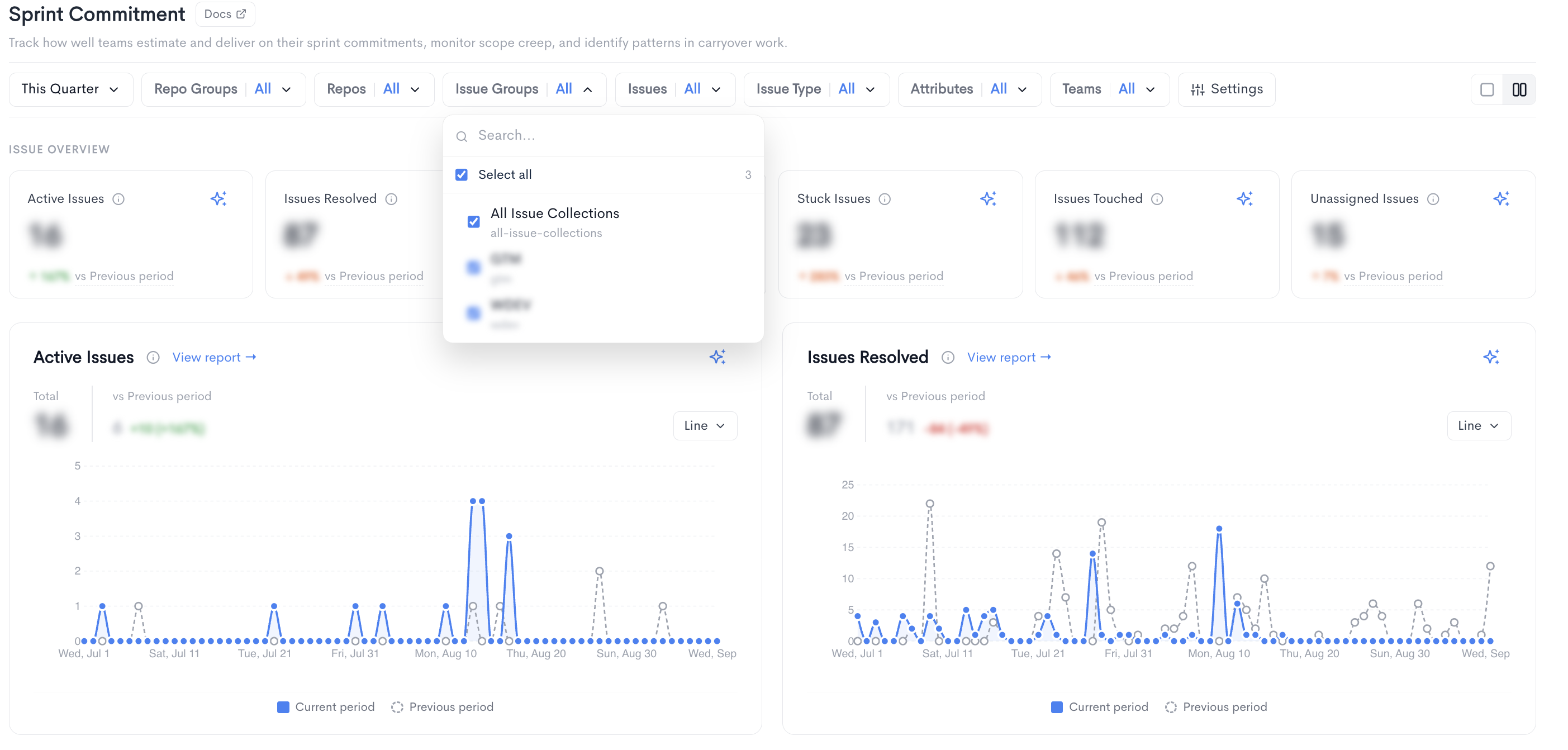
Once issue collection groups exist, they become a filter in their own right across the reporting pages. Instead of selecting a dozen projects every time you want to look at one part of the organization, you select the group once.
The Issue collection group and Issue collection filters work together as two levels of the same choice:
- Filter by issue collection group to scope a report to a whole set of collections — a product line, a department, a portfolio.
- Then filter by issue collection to narrow further within that group. The collection filter is scoped to your group selection, so it only offers collections that belong to the groups you picked, rather than every collection in the workspace.
Updated 27 days ago